


Anxiety doesn't always announce itself loudly. Sometimes it creeps in quietly - a constant low hum in the background of your day. That feeling of "there's too much going on up here" and yet nothing specific you can point to. I've been there. Honestly, I still go there. But over time I've built up a small collection of habits that take five minutes or less and genuinely help. No 45-minute morning routines. No expensive apps. Just a few small things that make the noise quieter.
Here's what's actually working for me.
1. Journal - But Not the Way You Think
Let me clear something up: my journal is not a diary. I'm not writing down everything that happened today in chronological order. It's more like... a brain drain. When something is circling in my head - a worry, a thought, a thing I said three days ago that I'm still analyzing - I write it down. Just that one thought. It doesn't have to be a paragraph. Sometimes it's a sentence.
The reason it works is simple: once it's on paper, it's no longer rattling around in my head. I have more clarity, and I actually know what to do with the thought once I can see it. Because honestly, sometimes it gets crowded up there, and journaling is the best way to make space.
The science backs this up, too. Research shows that regularly writing down your thoughts and feelings helps identify and process negative emotions and can meaningfully reduce anxiety symptoms. One study found that people who journaled about a stressful event for just 15 minutes saw significantly greater reductions in anxiety, depression, and hostility than those who didn't. And even brief journaling sessions of 5–10 minutes can produce measurable improvements in mood and stress levels when done consistently.
2. Quick Lymphatic Massage
Okay, I know this one sounds like it belongs in a different article. Bear with me.
I noticed something: whenever I was stressed, my neck and upper shoulders were completely locked up. Like, stiff in a way that made me realize my body had been holding tension I wasn't even consciously aware of. So I started doing a quick lymphatic drainage massage - just a few minutes every morning, focusing on the neck and collar area to open up the lymph nodes.
It sounds small. It is small. But it became one of the best wake-ups for my body in the most self-caring, gentle way. I step into my day feeling less like I'm already bracing for something. It's not about being a wellness person (I'm not, really), it's just that your body keeps score, and giving it a little attention in the morning before your mind takes over completely... it matters.
3. Lay on the Floor (Yes, Really)
When I'm working from home and I feel my concentration slipping or my chest getting tight, I stop. I go to the living room floor and I lie down flat on my back. No phone. No podcast. Nothing.
I just stare at the ceiling and try to feel the weight of my body against the floor - legs, back, arms, all of it sinking down. I try to only think about that. We could call it a meditation practice, but I'll be honest: my mind still buzzes. So I'll just call it grounding, because that's exactly what it feels like.
It calms me down. And luckily I don't see any spots on the ceiling, so I actually do relax. Five minutes of this and I come back to my desk feeling like a slightly different, slightly better person than the one who left it.
4. Read a Few Pages Instead of Scrolling
Doomscrolling is real and it is addictive. We all know it, and yet we keep doing it, because in the moment it genuinely feels like a way to unwind. But that little hit of stimulation leads to another, and another, and suddenly you're 30 minutes deep into Instagram without having done the one thing you originally picked up your phone for.
I've caught myself doing this more times than I can count. So now I keep my phone out of arm's reach and leave whatever book I'm currently reading within reach instead. Whenever I need that stimulation - that "I need something for my brain right now" feeling - I open the book instead.

You'd be surprised how fast you can finish a book when you read instead of scroll. And the feeling of gratification when you've actually done something good and intellectual for yourself? There's nothing quite like it. It's a completely different kind of satisfaction.
(I'm currently reading Your Brain on Art by Susan Magsamen and Ivy Ross, and it is - I say this without exaggeration - changing the way I think about creativity and mental health. More on that in a moment.)
5. Color in Lake
You can call me biased. I work at Lake, so yes, I test the app regularly - that's part of the job. But somewhere along the way, something shifted.
I started coloring outside of work.
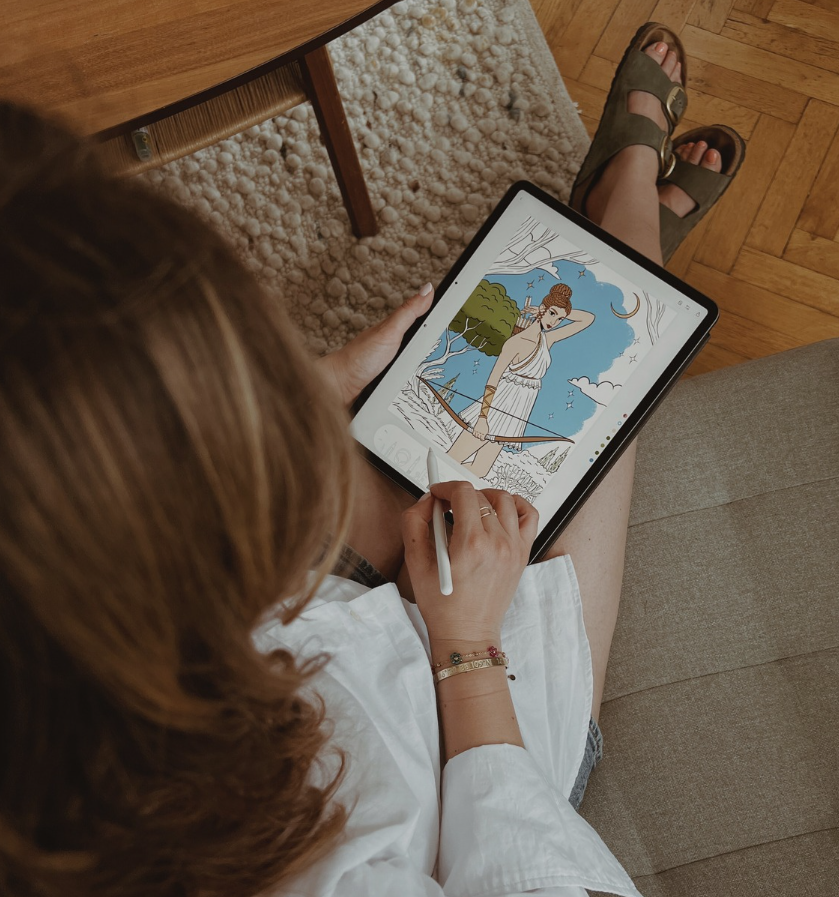
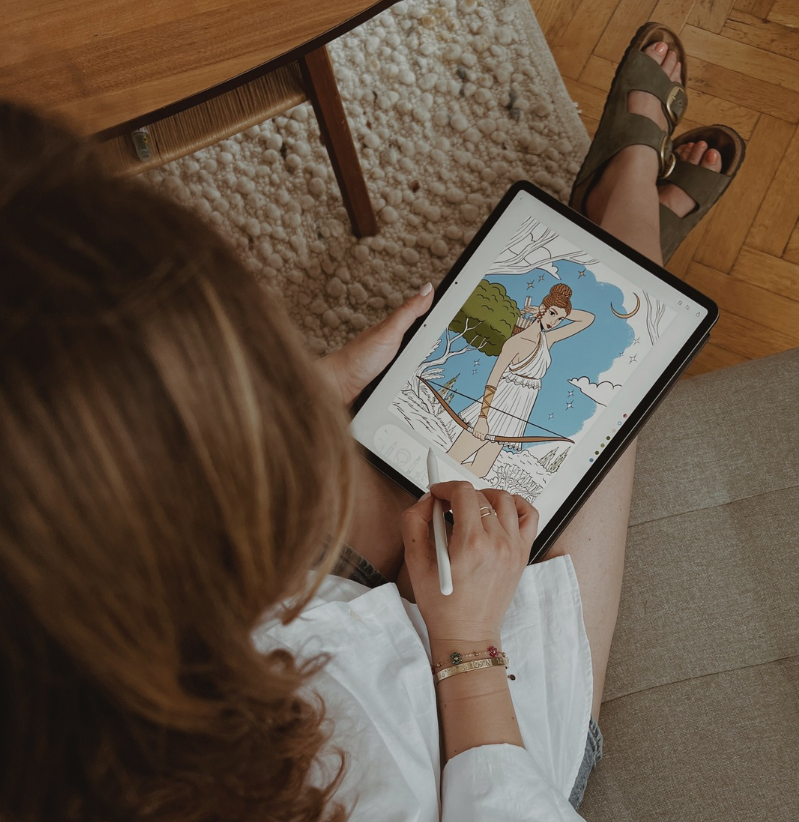
I should say: I do not consider myself a creative person. At least not in any type of visual crafts. So even doing it for work I felt a bit of pressure (you should see our designers' colorings). Which, when you think about it, is kind of funny - coloring is the first thing we do as kids. It should come naturally. But I struggled at first. I wasn't sure about colors, wasn't sure if I was "doing it right." But I kept going and slowly, I got it. I even watched a tutorial on how to shade (yes, I did), and now I actually get it. Now coloring has become a semi-regular practice - before bed, or in the evenings when my husband is watching some series and I'm sitting on the couch, focusing on what actually matters: my creativity. My moment of peace.
Here's the science behind why this works, and it's genuinely fascinating. Susan Magsamen, author of Your Brain on Art, writes that dopamine, serotonin, and oxytocin (the brain's feel-good chemicals) are released during the process of making art, and can help relieve anxiety and depression. She also notes that coloring, doodling, and drawing activate the prefrontal cortex (the part of your brain responsible for focus and rational thought) while calming the amygdala, which is essentially your brain's anxiety alarm. The result: a natural, chemical reset - no prescription required.
One more thing from the book that I keep thinking about: "Colors have the capacity to change our respiration, our blood pressure, even our body temperature." Which means that when you sit down to color in Lake - choosing a palette, playing with shades - you're not just passing time. You're actually changing your physical state. Mind-blowing, right?
The Common Thread
None of these habits are dramatic. None of them require a lifestyle overhaul or a lot of willpower. What they share is this: they bring you back into your body, out of your head, and into the present moment - even if only for five minutes.
And five minutes, it turns out, is enough to change the tone of the whole day. At least for me 😊 and hopefully for you as well.
If you want to try the coloring one (which, yes, I recommend), Lake is a digital coloring app with thousands of beautiful illustrations - from intricate patterns to simple, meditative designs. Whether you're a total beginner who doesn't know where to start, or someone who's been quietly coloring for years, it meets you exactly where you are.
Start with five minutes. See what happens.