



We've all been there: you open your screen time report and just stare at it in shock. Then you do the math and it gets worse.
Well, at least you are not the only one.
Worldwide, people spend an average of 6 hours and 38 minutes per day on screens. That's more than 200 hours a month - basically one week out of every four, spent entirely on devices 😳
That number makes a lot of people anxious. But here's the thing: not all those hours are doing the same thing to your brain. It's not only about how much, but more about what kind.
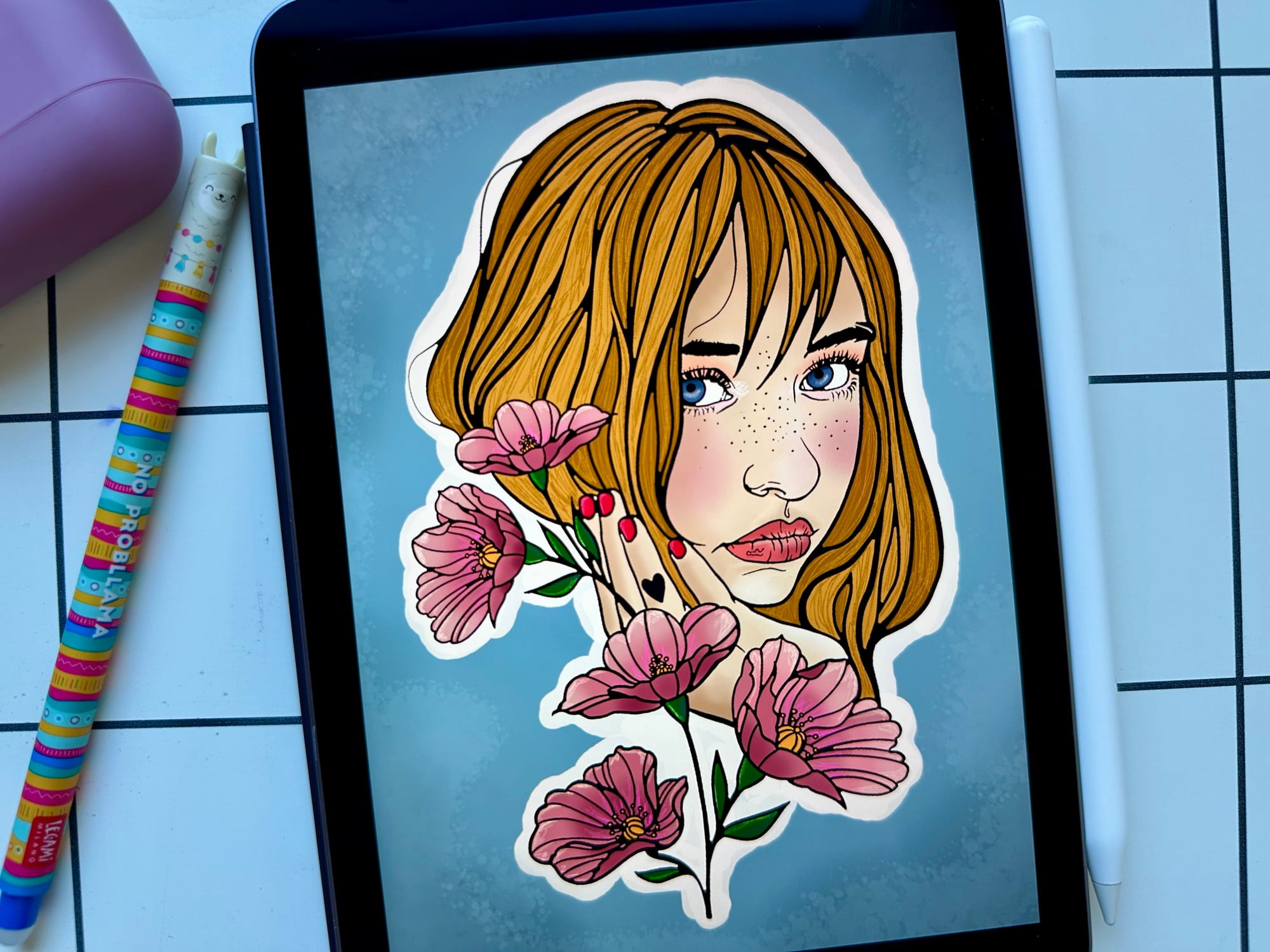
What is passive screen time?
Passive screen time is consuming content without any real intention or meaningful interaction: doomscrolling through social media, binge-watching shows you're not even enjoying, endlessly refreshing news feeds, letting autoplay carry you from one video to the next.
You're receiving, not creating. Your brain is stimulated but not working toward anything.
Maris Loeffler, a family and marriage therapist at Stanford Lifestyle Medicine, describes it bluntly: "Passive screen time is like eating sugar for your brain. It feels good in the moment, but you're not actually feeding yourself."
The data backs this up. A 2023 study published in Psychiatry Research found that passive smartphone use was significantly associated with worse mental health outcomes - both internalizing symptoms like anxiety and externalizing ones like irritability.
Sound familiar? It sure does to me.
What is active screen time?
Active screen time is the opposite: deliberate, engaged interaction with your device. You're making choices, creating something, solving problems. Think about journaling apps, digital drawing, meditation tools, even strategy games.
The same Psychiatry Research study found that more active forms of smartphone engagement were associated with better mental health outcomes.
So why does the distinction matter?
I think it's obvious that the issue is not the screen itself but what you actually do with it. Even research confirms that the type of content you engage with has a greater impact on your health than total screen time alone. Purposeful interactions (creative tools, educational content) can support well-being and cognitive function, while mindless scrolling does the opposite.
And then we come to the point where every wellness article tells you to "put down your device and pick up a coloring book."
But what if you're already coloring on the device?
The science behind coloring and your brain
The mental health benefits of coloring for adults are well documented.
Here's what the research actually shows:
- Coloring promotes mindfulness. According to the Mayo Clinic Health System, coloring helps you stay present - focusing on color choice, selecting areas to color, thinking only about what's in front of you. It calms the brain, improves sleep, and reduces feelings of depression and anxiety.
- Coloring redirects attention away from stress. Dr. Scott Bea, a clinical psychologist at Cleveland Clinic, explains that coloring takes your attention away from yourself and onto a present-moment activity. "In this way, it is very much like a meditative exercise," he says. He also notes that the low-stakes nature of coloring is part of what makes it work: it's hard to screw up, and even if you do, nothing bad happens. And it’s even easier on digital coloring, where you tap “undo” and you’re back to the previous state.
- Coloring reduces anxiety in clinical settings. A randomized controlled trial published in PMC studied patients with generalized anxiety disorder. Participants who received coloring therapy alongside conventional treatment showed significantly greater reductions in anxiety compared to the control group. The researchers found that coloring mimics a positive mindfulness intervention, shifting brain activity from heightened alertness toward physical and mental relaxation.
- Digital coloring specifically improves well-being. A 2022 study published in JMIR Serious Games tested an online coloring game used by 1.5 million players. Participants showed a significant increase in subjective well-being, and those who completed more awe-inspiring images also reported reduced anxiety. Adults aged 26 and older found it more effective at reducing anxiety than younger users - which is worth noting.
- Even short sessions make a measurable difference. A study examining 20-minute daily coloring sessions over seven consecutive days found that stress decreased and relaxation increased after each session. I color in Lake before bed, and I notice it every time - my mind is quieter, and I fall asleep more easily. I wrote more about this in From Scrolling to Stillness: How I Changed My Bedtime Routine if you're curious.
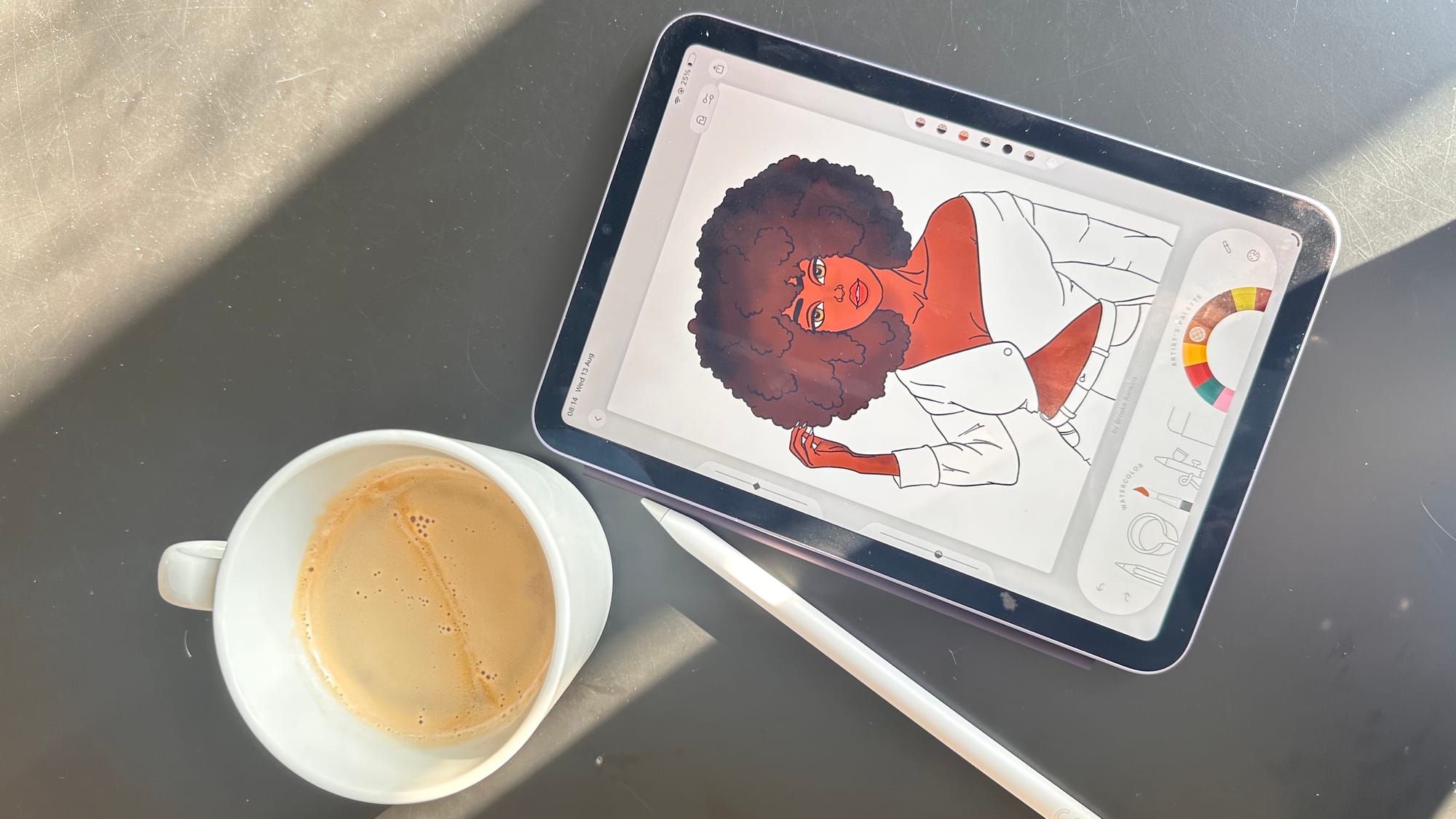
Why iPad coloring specifically?
Every cognitive benefit of coloring happens whether you're holding a crayon or an Apple Pencil. You're still choosing colors, staying within boundaries, making aesthetic decisions, engaging fine motor skills. The mechanism is the same: focused, present-moment, low-pressure creative activity.
But digital coloring has its own advantages. We've already covered this in another article, but to recap: no supplies to buy or replace, no setup or cleanup, no carrying a bag of markers through airport security.
As one writer at Tom's Guide put it after switching from paper coloring books to an iPad: it's easier to take anywhere, and you have far more options on demand.
How to tell if your screen time is helping or hurting
Now we already know that not every minute on a screen is equal. If you’re still not sure, here’s a simple way to evaluate it:
The rise of intentional screen time
The conversation about well-being is changing. Rather than demonizing screens entirely, more people are asking how to use them deliberately.
Research from the University of Saskatchewan analyzed 2,500 user reviews of popular games and found that many players described gentle, repetitive digital tasks as helpful for emotional regulation - comparable to a meditative practice.
Digital coloring fits perfectly here: it's slow, repetitive, creative, and calming.
And the goal isn't fewer screen minutes, it's better ones.
Swap 30 minutes of doomscrolling for 30 minutes of coloring in Lake - your total screen time stays identical, but trust me, your mental state doesn't
How to make the switch?
A few practical starting points:
- Check your screen time by app. Don't take into account just the screen time as a whole, but take a look at the usage by app. Social media and news apps are usually the biggest passive-time offenders.
- Replace one passive habit with one active one. Instead of opening Instagram before bed, open Lake. Same amount of time, different outcome. Use apps like One Sec to help you out. You can even use them in a way that every time you want to open a social media app, it offers you a better alternative. It works like a charm!
- Create a small ritual around it. Dim the lights, make tea, open the app. Ritualizing the activity signals to your brain that this is deliberate downtime, not default scrolling.
- Lower the barrier. Keep the coloring app icon on your home screen. The easier the access, the more likely you are to reach for it instead.
- Let go of the total number. An hour of coloring on your iPad is not the same as an hour on TikTok, even though your device counts them identically. Judge your screen time by how it makes you feel, not by the sum.
The goal should not be focused necessarily on how to spend less time on your phone, but more about how you feel when you put it down. Tonight, instead of opening Instagram or TikTok, open Lake. Same screen, same sofa, but completely different ending to your day.